C001
Theme: competition
Statement: Stoke City are competing in the EFL Championship (Sky Bet Championship) in the 2026/27 season.
Claim type: fact
Importance: defining
Confidence: high
Time scope: 2026/27
Notes: Verified against a September 2026 EFL fixture/referee listing.
Sources: S001
Sources and context · C001
Stoke City are competing in the EFL Championship (Sky Bet Championship) in the 2026/27 season.
Verified against a September 2026 EFL fixture/referee listing.
S001
C002
Theme: origins
Statement: Stoke City officially use 1863 as their foundation year, but modern archival research argues that the documented formation of Stoke Ramblers took place in 1868 under Harry John Almond.
Claim type: contested
Importance: defining
Confidence: high
Time scope: stable
Notes: The disagreement is about the foundation date, not the continuity of the later Stoke club. Preserve both positions.
Sources: S002, S003, S004
Sources and context · C002
Stoke City officially use 1863 as their foundation year, but modern archival research argues that the documented formation of Stoke Ramblers took place in 1868 under Harry John Almond.
The disagreement is about the foundation date, not the continuity of the later Stoke club. Preserve both positions.
S002 · S003 · S004
C003
Theme: origins
Statement: The club's own chronology records a 1-1 game against E.W. May's XV on 17 October 1868 as its first recorded match.
Claim type: fact
Importance: major
Confidence: high
Time scope: stable
Notes: This fits the documentary evidence used by researchers arguing for an 1868 formation.
Sources: S002
Sources and context · C003
The club's own chronology records a 1-1 game against E.W. May's XV on 17 October 1868 as its first recorded match.
This fits the documentary evidence used by researchers arguing for an 1868 formation.
S002
C004
Theme: place
Statement: Stoke-on-Trent's identity was shaped by the pottery industry and the conurbation is still widely known as The Potteries.
Claim type: fact
Importance: defining
Confidence: high
Time scope: stable
Notes: This industrial identity directly explains the club nickname and recurring kiln imagery.
Sources: S005
Sources and context · C004
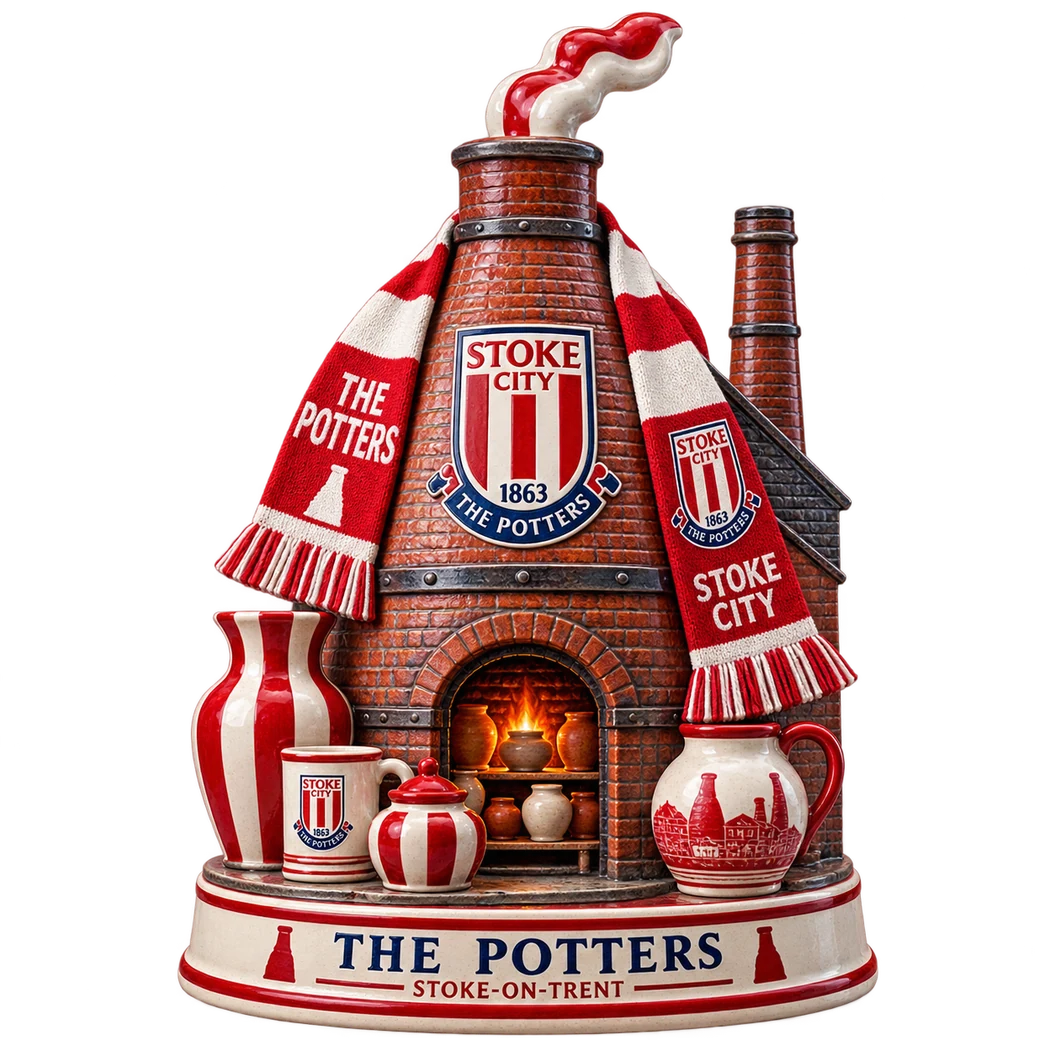
Stoke-on-Trent's identity was shaped by the pottery industry and the conurbation is still widely known as The Potteries.
This industrial identity directly explains the club nickname and recurring kiln imagery.
S005
C005
Theme: place
Statement: Modern Stoke-on-Trent was formed from six historic towns - Tunstall, Burslem, Hanley, Stoke, Fenton and Longton - creating a city with strong local identities inside one civic boundary.
Claim type: fact
Importance: major
Confidence: high
Time scope: stable
Notes: The football rivalry with Port Vale maps unusually well onto this six-town civic geography.
Sources: S006, S007
Sources and context · C005
Modern Stoke-on-Trent was formed from six historic towns - Tunstall, Burslem, Hanley, Stoke, Fenton and Longton - creating a city with strong local identities inside one civic boundary.
The football rivalry with Port Vale maps unusually well onto this six-town civic geography.
S006 · S007
C006
Theme: name
Statement: After Stoke-on-Trent received city status in 1925, the football club changed its name from Stoke to Stoke City.
Claim type: fact
Importance: major
Confidence: high
Time scope: stable
Notes: An unusually direct link between civic history and the club's name.
Sources: S002, S007
Sources and context · C006
After Stoke-on-Trent received city status in 1925, the football club changed its name from Stoke to Stoke City.
An unusually direct link between civic history and the club's name.
S002 · S007
C007
Theme: symbols
Statement: The nickname 'The Potters' is a direct reference to Stoke-on-Trent's ceramics industry.
Claim type: fact
Importance: defining
Confidence: high
Time scope: stable
Notes: The nickname remains central to official club language.
Sources: S005, S044
Sources and context · C007
The nickname 'The Potters' is a direct reference to Stoke-on-Trent's ceramics industry.
The nickname remains central to official club language.
S005 · S044
C008
Theme: symbols
Statement: Red and white vertical stripes are Stoke City's defining home colours and remain the basis of the 2026/27 home identity.
Claim type: fact
Importance: defining
Confidence: high
Time scope: current
Notes: Kit details can change by season; the red-and-white identity itself is long-established.
Sources: S044
Sources and context · C008
Red and white vertical stripes are Stoke City's defining home colours and remain the basis of the 2026/27 home identity.
Kit details can change by season; the red-and-white identity itself is long-established.
S044
C009
Theme: symbols
Statement: For 2026/27 Stoke adopted a crest inspired by the 1977-92 badge, restoring strongly local imagery including a bottle kiln and Staffordshire knot; the change followed a supporter vote of 68% to 32%.
Claim type: fact
Importance: major
Confidence: high
Time scope: 2026/27
Notes: The crest also retains the club's claimed 1863 foundation year, despite the separate historical debate over 1868.
Sources: S043, S044
Sources and context · C009
For 2026/27 Stoke adopted a crest inspired by the 1977-92 badge, restoring strongly local imagery including a bottle kiln and Staffordshire knot; the change followed a supporter vote of 68% to 32%.
The crest also retains the club's claimed 1863 foundation year, despite the separate historical debate over 1868.
S043 · S044
C010
Theme: ground_history
Statement: The Victoria Ground was Stoke City's home from 1878 until 1997 and remains a central lost-place reference in older supporter memory.
Claim type: interpretation
Importance: defining
Confidence: high
Time scope: historical
Notes: The second half of this statement is interpretive but strongly supported by supporter oral history and the way the new ground retains Boothen naming.
Sources: S002, S009
Sources and context · C010
The Victoria Ground was Stoke City's home from 1878 until 1997 and remains a central lost-place reference in older supporter memory.
The second half of this statement is interpretive but strongly supported by supporter oral history and the way the new ground retains Boothen naming.
S002 · S009
C011
Theme: ground_history
Statement: The Boothen End at the Victoria Ground became the club's best-known terrace identity; the name was carried into the current stadium.
Claim type: interpretation
Importance: major
Confidence: high
Time scope: stable
Notes: The physical structures changed, but 'Boothen' remained a shorthand for the vocal home end.
Sources: S009, S030, S035
Sources and context · C011
The Boothen End at the Victoria Ground became the club's best-known terrace identity; the name was carried into the current stadium.
The physical structures changed, but 'Boothen' remained a shorthand for the vocal home end.
S009 · S030 · S035
C012
Theme: ground_history
Statement: A severe storm in January 1976 destroyed most of the Butler Street Stand roof at the Victoria Ground, with contemporary archive material putting the damage at about £250,000.
Claim type: fact
Importance: major
Confidence: high
Time scope: historical
Notes: Often retold because it arrived during a strong footballing era and became part of the club's hard-luck history.
Sources: S010
Sources and context · C012
A severe storm in January 1976 destroyed most of the Butler Street Stand roof at the Victoria Ground, with contemporary archive material putting the damage at about £250,000.
Often retold because it arrived during a strong footballing era and became part of the club's hard-luck history.
S010
C013
Theme: honours
Statement: Stoke City's 2-1 victory over Chelsea at Wembley on 4 March 1972 delivered the club's first major trophy and remains its only major domestic cup triumph as of 2026.
Claim type: fact
Importance: defining
Confidence: high
Time scope: stable
Notes: Terry Conroy and George Eastham scored for Stoke.
Sources: S002, S037
Sources and context · C013
Stoke City's 2-1 victory over Chelsea at Wembley on 4 March 1972 delivered the club's first major trophy and remains its only major domestic cup triumph as of 2026.
Terry Conroy and George Eastham scored for Stoke.
S002 · S037
C014
Theme: matches
Statement: Reaching the 1972 League Cup final required a four-match semi-final against West Ham United, including two neutral-venue replays, before Stoke won the second replay 3-2.
Claim type: fact
Importance: major
Confidence: high
Time scope: historical
Notes: The drawn-out semi-final is one reason the cup run has its own mythology beyond the Wembley final.
Sources: S038
Sources and context · C014
Reaching the 1972 League Cup final required a four-match semi-final against West Ham United, including two neutral-venue replays, before Stoke won the second replay 3-2.
The drawn-out semi-final is one reason the cup run has its own mythology beyond the Wembley final.
S038
C015
Theme: people
Statement: Sir Stanley Matthews is inseparable from Stoke's public identity: he began and ended his league career with the club, was still playing top-flight football for Stoke at 50, and received an extraordinary civic farewell after his death.
Claim type: fact
Importance: defining
Confidence: high
Time scope: stable
Notes: Avoid reducing Matthews only to his Blackpool years; Stoke is where his career began and ended.
Sources: S002, S013
Sources and context · C015
Sir Stanley Matthews is inseparable from Stoke's public identity: he began and ended his league career with the club, was still playing top-flight football for Stoke at 50, and received an extraordinary civic farewell after his death.
Avoid reducing Matthews only to his Blackpool years; Stoke is where his career began and ended.
S002 · S013
C016
Theme: ground_features
Statement: The three-figure Sir Stanley Matthews sculpture at the current stadium depicts stages of his career, was modelled by local artists using local clay before casting, and deliberately faces towards the former Victoria Ground.
Claim type: fact
Importance: major
Confidence: high
Time scope: stable
Notes: A particularly good visitor detail because the direction of the statue is part of the memorial's meaning.
Sources: S014, S046
Sources and context · C016
The three-figure Sir Stanley Matthews sculpture at the current stadium depicts stages of his career, was modelled by local artists using local clay before casting, and deliberately faces towards the former Victoria Ground.
A particularly good visitor detail because the direction of the statue is part of the memorial's meaning.
S014 · S046
C017
Theme: people
Statement: John Ritchie remains Stoke City's record goalscorer with 176 goals; his memorial statue was relocated in 2024 after feedback from supporters and his family.
Claim type: fact
Importance: major
Confidence: high
Time scope: stable
Notes: The relocation itself shows how supporter memory influences the physical presentation of club heritage.
Sources: S012
Sources and context · C017
John Ritchie remains Stoke City's record goalscorer with 176 goals; his memorial statue was relocated in 2024 after feedback from supporters and his family.
The relocation itself shows how supporter memory influences the physical presentation of club heritage.
S012
C018
Theme: people
Statement: Gordon Banks' Stoke years are embedded in the club's heritage through the 1972 trophy side and a statue outside the stadium.
Claim type: fact
Importance: major
Confidence: high
Time scope: stable
Notes: Banks is a national figure, but his post-1966 club identity is strongly tied to Stoke.
Sources: S037, S047
Sources and context · C018
Gordon Banks' Stoke years are embedded in the club's heritage through the 1972 trophy side and a statue outside the stadium.
Banks is a national figure, but his post-1966 club identity is strongly tied to Stoke.
S037 · S047
C019
Theme: history
Statement: Stoke finished the 1984/85 top-flight season with 17 points, an enduring low-water mark in the club's modern history.
Claim type: fact
Importance: major
Confidence: high
Time scope: historical
Notes: Use as a low point, not as shorthand for the club as a whole.
Sources: S036, S052
Sources and context · C019
Stoke finished the 1984/85 top-flight season with 17 points, an enduring low-water mark in the club's modern history.
Use as a low point, not as shorthand for the club as a whole.
S036 · S052
C020
Theme: history
Statement: Lou Macari's early-1990s Stoke is remembered as a revival, culminating in the 1992 Football League Trophy win and a club-record 25-match unbeaten league run during the 1992/93 promotion season.
Claim type: interpretation
Importance: major
Confidence: high
Time scope: historical
Notes: The Macari era matters disproportionately in supporter memory because it restored momentum after a poor late-1980s period.
Sources: S020, S036, S029
Sources and context · C020
Lou Macari's early-1990s Stoke is remembered as a revival, culminating in the 1992 Football League Trophy win and a club-record 25-match unbeaten league run during the 1992/93 promotion season.
The Macari era matters disproportionately in supporter memory because it restored momentum after a poor late-1980s period.
S020 · S036 · S029
C021
Theme: supporter_culture
Statement: The Oatcake fanzine began in November 1988 and became a defining independent Stoke supporter voice for more than three decades.
Claim type: fact
Importance: major
Confidence: high
Time scope: historical
Notes: Its title itself is local: the North Staffordshire oatcake is a Potteries food marker.
Sources: S028, S029, S051
Sources and context · C021
The Oatcake fanzine began in November 1988 and became a defining independent Stoke supporter voice for more than three decades.
Its title itself is local: the North Staffordshire oatcake is a Potteries food marker.
S028 · S029 · S051
C022
Theme: supporter_culture
Statement: A supporter oral-history account traces The Oatcake's first issue to a small Boothen End group using a child's typewriter and producing roughly 300 photocopied copies.
Claim type: supporter_view
Importance: supporting
Confidence: medium
Time scope: historical
Notes: Treat as first-person supporter history rather than a separately archived production record.
Sources: S029
Sources and context · C022
A supporter oral-history account traces The Oatcake's first issue to a small Boothen End group using a child's typewriter and producing roughly 300 photocopied copies.
Treat as first-person supporter history rather than a separately archived production record.
S029
C023
Theme: songs
Statement: The origin of Stoke supporters singing 'Delilah' is not settled; a widely repeated late-1980s 'TJ' story competes with an older story linking the song to a 1975 concert at the Victoria Ground.
Claim type: folklore
Importance: major
Confidence: medium
Time scope: stable
Notes: Do not present one origin story as proven.
Sources: S026, S027
Sources and context · C023
The origin of Stoke supporters singing 'Delilah' is not settled; a widely repeated late-1980s 'TJ' story competes with an older story linking the song to a 1975 concert at the Victoria Ground.
Do not present one origin story as proven.
S026 · S027
C024
Theme: songs
Statement: 'We'll Be With You' is associated with Stoke's 1972 League Cup final and survives as a heritage song in the supporter repertoire.
Claim type: fact
Importance: major
Confidence: medium
Time scope: stable
Notes: The source is a long-running supporter/fanzine account rather than an official discography.
Sources: S027
Sources and context · C024
'We'll Be With You' is associated with Stoke's 1972 League Cup final and survives as a heritage song in the supporter repertoire.
The source is a long-running supporter/fanzine account rather than an official discography.
S027
C025
Theme: rivalry
Statement: The Potteries derby with Port Vale matters because two professional clubs inhabit the same six-town city, yet long spells in different divisions have made meetings intermittent rather than routine.
Claim type: interpretation
Importance: defining
Confidence: high
Time scope: stable
Notes: This combination of geographic closeness and footballing separation is distinctive.
Sources: S005, S006, S015
Sources and context · C025
The Potteries derby with Port Vale matters because two professional clubs inhabit the same six-town city, yet long spells in different divisions have made meetings intermittent rather than routine.
This combination of geographic closeness and footballing separation is distinctive.
S005 · S006 · S015
C026
Theme: rivalry
Statement: Contemporary reporting of the February 2002 Stoke-Port Vale game described the derby as the most important match of the season for many supporters.
Claim type: supporter_view
Importance: major
Confidence: high
Time scope: historical
Notes: Useful evidence of intensity from the last era of regular league meetings; it should not be universalised to every generation.
Sources: S016
Sources and context · C026
Contemporary reporting of the February 2002 Stoke-Port Vale game described the derby as the most important match of the season for many supporters.
Useful evidence of intensity from the last era of regular league meetings; it should not be universalised to every generation.
S016
C027
Theme: rivalry
Statement: Because the Potteries derby has had long gaps, its emotional weight can differ by generation: supporters who lived through the fiery 1990s had repeated first-team reference points that younger supporters have not had.
Claim type: interpretation
Importance: major
Confidence: medium
Time scope: stable
Notes: An interpretation based on documented periods apart and the book's emphasis on the 1990s reunion, not a survey of all supporters.
Sources: S015
Sources and context · C027
Because the Potteries derby has had long gaps, its emotional weight can differ by generation: supporters who lived through the fiery 1990s had repeated first-team reference points that younger supporters have not had.
An interpretation based on documented periods apart and the book's emphasis on the 1990s reunion, not a survey of all supporters.
S015
C028
Theme: rivalry
Statement: In 2003 Stoke's then Icelandic owners made a bid for cash-strapped Port Vale, briefly creating an extraordinary off-field scenario involving the city's two rivals.
Claim type: fact
Importance: supporting
Confidence: high
Time scope: historical
Notes: The bid/proposal happened; a merger or takeover did not.
Sources: S019
Sources and context · C028
In 2003 Stoke's then Icelandic owners made a bid for cash-strapped Port Vale, briefly creating an extraordinary off-field scenario involving the city's two rivals.
The bid/proposal happened; a merger or takeover did not.
S019
C029
Theme: ownership
Statement: An Icelandic consortium took control of Stoke in 1999; the Coates family bought the club back in 2006, and John Coates became outright owner in 2024.
Claim type: fact
Importance: major
Confidence: high
Time scope: stable
Notes: Ownership history matters because it brackets the Britannia-era transition and the later Premier League rise.
Sources: S017, S018
Sources and context · C029
An Icelandic consortium took control of Stoke in 1999; the Coates family bought the club back in 2006, and John Coates became outright owner in 2024.
Ownership history matters because it brackets the Britannia-era transition and the later Premier League rise.
S017 · S018
C030
Theme: ownership
Statement: When John Coates became outright owner in 2024, BBC Sport reported Stoke City as debt-free and owning both the stadium and training ground.
Claim type: fact
Importance: supporting
Confidence: high
Time scope: 2024
Notes: Financial status can change; retain the 2024 time scope.
Sources: S018
Sources and context · C030
When John Coates became outright owner in 2024, BBC Sport reported Stoke City as debt-free and owning both the stadium and training ground.
Financial status can change; retain the 2024 time scope.
S018
C031
Theme: matches
Statement: Stoke beat Bristol City 2-1 at old Wembley in the 2000 Football League Trophy final during the Icelandic-ownership era, before league promotion was finally achieved in 2002.
Claim type: fact
Importance: major
Confidence: high
Time scope: historical
Notes: The match drew more than 75,000 and remains a strong pre-Premier-League memory.
Sources: S020
Sources and context · C031
Stoke beat Bristol City 2-1 at old Wembley in the 2000 Football League Trophy final during the Icelandic-ownership era, before league promotion was finally achieved in 2002.
The match drew more than 75,000 and remains a strong pre-Premier-League memory.
S020
C032
Theme: matches
Statement: Stoke beat Brentford 2-0 in the 2002 play-off final to win promotion, then dismissed manager Gudjon Thordarson five days later because the board said the working relationship had become untenable.
Claim type: fact
Importance: major
Confidence: high
Time scope: historical
Notes: One of the club's stranger managerial episodes: promotion and dismissal arrived in the same week.
Sources: S039
Sources and context · C032
Stoke beat Brentford 2-0 in the 2002 play-off final to win promotion, then dismissed manager Gudjon Thordarson five days later because the board said the working relationship had become untenable.
One of the club's stranger managerial episodes: promotion and dismissal arrived in the same week.
S039
C033
Theme: matches
Statement: A 0-0 draw with Leicester City on 4 May 2008 secured Stoke's return to the English top flight after 23 years.
Claim type: fact
Importance: defining
Confidence: high
Time scope: historical
Notes: The promotion is a modern identity turning point because it began a ten-season Premier League stay.
Sources: S021, S002
Sources and context · C033
A 0-0 draw with Leicester City on 4 May 2008 secured Stoke's return to the English top flight after 23 years.
The promotion is a modern identity turning point because it began a ten-season Premier League stay.
S021 · S002
C034
Theme: football_style
Statement: During Tony Pulis's Premier League Stoke era, Rory Delap's long throws became both a tactical weapon and a piece of theatre, with Pulis recalling the crowd rising in anticipation before the throw was even taken.
Claim type: fact
Importance: major
Confidence: high
Time scope: historical
Notes: Important to Stoke's external reputation, but not a complete description of the club's footballing tradition.
Sources: S023, S024
Sources and context · C034
During Tony Pulis's Premier League Stoke era, Rory Delap's long throws became both a tactical weapon and a piece of theatre, with Pulis recalling the crowd rising in anticipation before the throw was even taken.
Important to Stoke's external reputation, but not a complete description of the club's footballing tradition.
S023 · S024
C035
Theme: football_culture
Statement: The phrase about whether a great player could perform on a 'cold, rainy night in Stoke' grew into an international football cliché rooted in the Britannia Stadium's weather reputation and the physical image of Pulis-era Stoke.
Claim type: interpretation
Importance: major
Confidence: high
Time scope: stable
Notes: Treat as a meme/cultural shorthand, not an objective measurement of difficulty or Stoke's permanent style.
Sources: S025
Sources and context · C035
The phrase about whether a great player could perform on a 'cold, rainy night in Stoke' grew into an international football cliché rooted in the Britannia Stadium's weather reputation and the physical image of Pulis-era Stoke.
Treat as a meme/cultural shorthand, not an objective measurement of difficulty or Stoke's permanent style.
S025
C036
Theme: matches
Statement: Stoke's 5-0 FA Cup semi-final win over Bolton in 2011 sent the club to its first FA Cup final and into European competition the following season.
Claim type: fact
Importance: major
Confidence: high
Time scope: historical
Notes: The final itself was lost 1-0 to Manchester City.
Sources: S002
Sources and context · C036
Stoke's 5-0 FA Cup semi-final win over Bolton in 2011 sent the club to its first FA Cup final and into European competition the following season.
The final itself was lost 1-0 to Manchester City.
S002
C037
Theme: matches
Statement: Stoke's 6-1 win over Liverpool on the final day of 2014/15 is one of the standout scorelines of the post-Pulis era and came in Steven Gerrard's final Liverpool appearance.
Claim type: fact
Importance: major
Confidence: high
Time scope: historical
Notes: A useful counterweight to the idea that Stoke's Premier League identity was only attritional.
Sources: S022
Sources and context · C037
Stoke's 6-1 win over Liverpool on the final day of 2014/15 is one of the standout scorelines of the post-Pulis era and came in Steven Gerrard's final Liverpool appearance.
A useful counterweight to the idea that Stoke's Premier League identity was only attritional.
S022
C038
Theme: current_ground
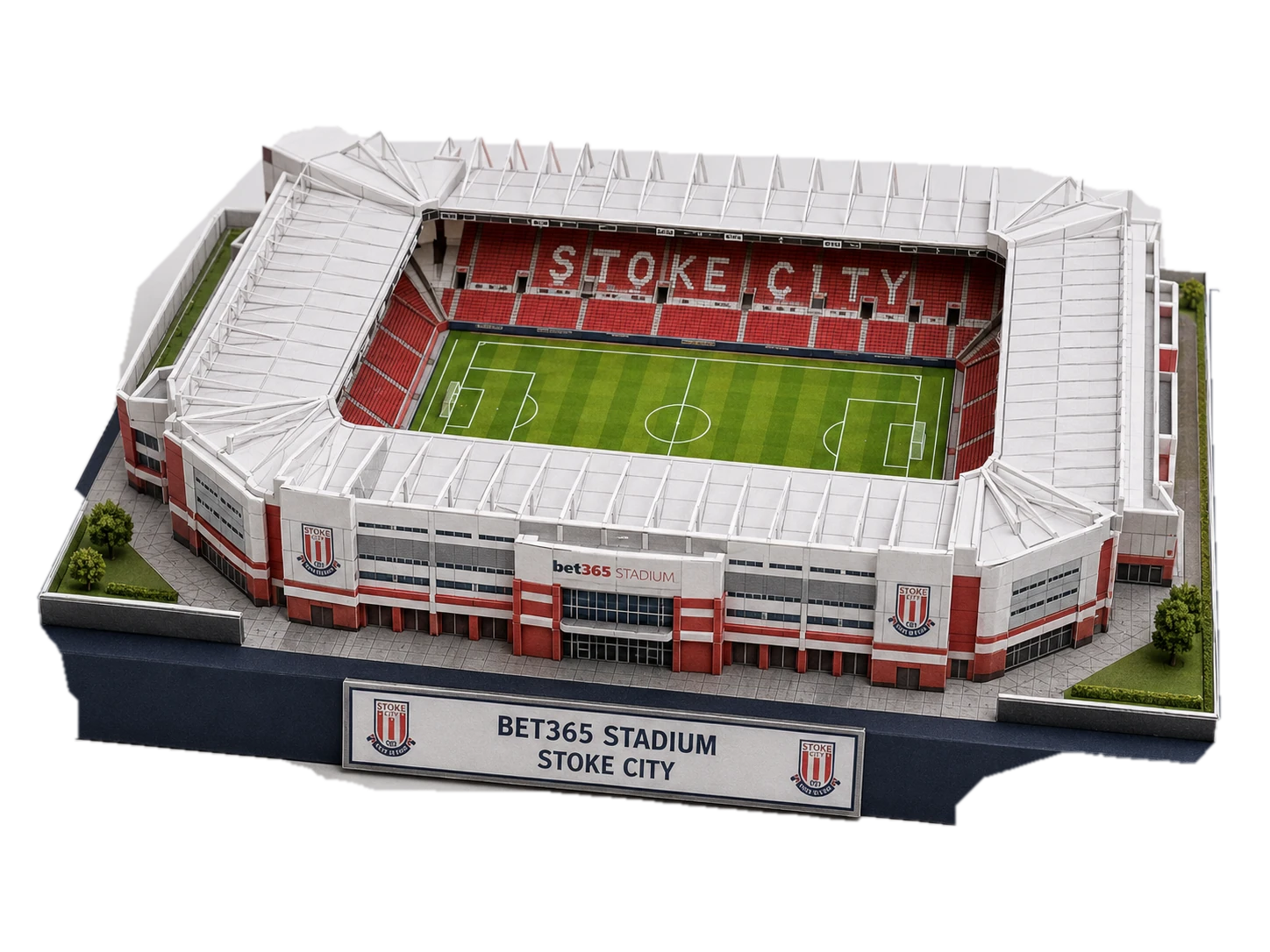
Statement: From August 2024 visiting supporters were moved to the south-east corner of the bet365 Stadium rather than the previous larger South Stand arrangement.
Claim type: current_experience
Importance: supporting
Confidence: high
Time scope: current
Notes: Matchday allocation and access arrangements can change; recheck before fixture publication.
Sources: S034
Sources and context · C038
From August 2024 visiting supporters were moved to the south-east corner of the bet365 Stadium rather than the previous larger South Stand arrangement.
Matchday allocation and access arrangements can change; recheck before fixture publication.
S034
C039
Theme: current_ground
Statement: Licensed standing was introduced in the South Stand and south-east corner in 2024 as part of an atmosphere-focused stadium project.
Claim type: fact
Importance: supporting
Confidence: high
Time scope: current
Notes: Current physical feature; later stadium works may alter exact configuration.
Sources: S032
Sources and context · C039
Licensed standing was introduced in the South Stand and south-east corner in 2024 as part of an atmosphere-focused stadium project.
Current physical feature; later stadium works may alter exact configuration.
S032
C040
Theme: current_ground
Statement: A new fan zone opened beside the Boothen End area in 2024, adding a deliberately social pre-match space around the stadium.
Claim type: fact
Importance: supporting
Confidence: high
Time scope: current
Notes: Mention only as part of how the modern stadium is trying to build pre-match culture, not as a food/drink recommendation.
Sources: S033
Sources and context · C040
A new fan zone opened beside the Boothen End area in 2024, adding a deliberately social pre-match space around the stadium.
Mention only as part of how the modern stadium is trying to build pre-match culture, not as a food/drink recommendation.
S033
C041
Theme: current_ground
Statement: The bet365 Stadium's exposed setting contributes to a genuine wind-and-weather reputation, although individual match experiences vary.
Claim type: current_experience
Importance: supporting
Confidence: medium
Time scope: current
Notes: This is a repeated ground-character observation, not a guarantee about weather on any given day.
Sources: S025, S035
Sources and context · C041
The bet365 Stadium's exposed setting contributes to a genuine wind-and-weather reputation, although individual match experiences vary.
This is a repeated ground-character observation, not a guarantee about weather on any given day.
S025 · S035
C042
Theme: supporter_identity
Statement: Stoke supporters commonly use or accept 'Stokies' as a local/supporter term, while 'Potters' is the club's primary nickname.
Claim type: fact
Importance: supporting
Confidence: medium
Time scope: stable
Notes: 'Stokies' is also a wider local demonym, so context matters.
Sources: S027, S044
Sources and context · C042
Stoke supporters commonly use or accept 'Stokies' as a local/supporter term, while 'Potters' is the club's primary nickname.
'Stokies' is also a wider local demonym, so context matters.
S027 · S044
C043
Theme: supporter_identity
Statement: Stoke's organised support has long extended beyond North Staffordshire: a London branch was formed in 1968, and a Stoke supporters' organiser, Monica Hartland, helped establish the wider association for provincial supporters in London in 1975.
Claim type: fact
Importance: supporting
Confidence: high
Time scope: historical
Notes: An unusually good deep cut showing long-distance supporter organisation before the modern internet era.
Sources: S031
Sources and context · C043
Stoke's organised support has long extended beyond North Staffordshire: a London branch was formed in 1968, and a Stoke supporters' organiser, Monica Hartland, helped establish the wider association for provincial supporters in London in 1975.
An unusually good deep cut showing long-distance supporter organisation before the modern internet era.
S031
C044
Theme: supporter_identity
Statement: Local branch culture remains active; Knypersley & Biddulph Stoke City Supporters Club traces its formation to 1993 and describes a volunteer-run organisation with hundreds of active members in 2025/26.
Claim type: current_experience
Importance: supporting
Confidence: medium
Time scope: 2025/26
Notes: Membership figures are self-reported by the branch and can change.
Sources: S041
Sources and context · C044
Local branch culture remains active; Knypersley & Biddulph Stoke City Supporters Club traces its formation to 1993 and describes a volunteer-run organisation with hundreds of active members in 2025/26.
Membership figures are self-reported by the branch and can change.
S041
C045
Theme: supporter_governance
Statement: Stoke City launched a newer formal supporter-engagement structure, Stoke City Connect, with fan assemblies replacing the former Supporters Council model.
Claim type: fact
Importance: supporting
Confidence: medium
Time scope: current
Notes: This is engagement rather than supporter ownership; the club remains privately owned.
Sources: S040
Sources and context · C045
Stoke City launched a newer formal supporter-engagement structure, Stoke City Connect, with fan assemblies replacing the former Supporters Council model.
This is engagement rather than supporter ownership; the club remains privately owned.
S040
C046
Theme: deep_cut
Statement: In 1967 Stoke City crossed the Atlantic as a complete imported team to play in the United Soccer Association under the temporary identity 'Cleveland Stokers'.
Claim type: fact
Importance: colour
Confidence: medium
Time scope: historical
Notes: One of the club's strangest international footnotes.
Sources: S042
Sources and context · C046
In 1967 Stoke City crossed the Atlantic as a complete imported team to play in the United Soccer Association under the temporary identity 'Cleveland Stokers'.
One of the club's strangest international footnotes.
S042
C047
Theme: deep_cut
Statement: The former Stoke City Supporters' Social Club building near the Victoria Ground site still stands, even though it no longer serves that function.
Claim type: fact
Importance: colour
Confidence: high
Time scope: current
Notes: A physical remnant of old matchday Stoke that is easy to miss.
Sources: S011
Sources and context · C047
The former Stoke City Supporters' Social Club building near the Victoria Ground site still stands, even though it no longer serves that function.
A physical remnant of old matchday Stoke that is easy to miss.
S011
C048
Theme: deep_cut
Statement: The 2026/27 away-kit design explicitly references Reginald Mitchell and the Spitfire, showing the club continuing to use wider Stoke-on-Trent industrial and engineering heritage in its visual identity.
Claim type: fact
Importance: supporting
Confidence: high
Time scope: 2026/27
Notes: A current-season identity detail rather than a permanent club symbol.
Sources: S045
Sources and context · C048
The 2026/27 away-kit design explicitly references Reginald Mitchell and the Spitfire, showing the club continuing to use wider Stoke-on-Trent industrial and engineering heritage in its visual identity.
A current-season identity detail rather than a permanent club symbol.
S045
C049
Theme: folklore
Statement: A famous 1992 Potteries derby story has Stoke striker Dave Regis shooting towards an empty net only for the ball to stop in a puddle on a waterlogged Vale Park pitch.
Claim type: fact
Importance: colour
Confidence: medium
Time scope: historical
Notes: Corroborated by a local journalist/supporter recollection; the comic quality has helped it survive in derby storytelling.
Sources: S050
Sources and context · C049
A famous 1992 Potteries derby story has Stoke striker Dave Regis shooting towards an empty net only for the ball to stop in a puddle on a waterlogged Vale Park pitch.
Corroborated by a local journalist/supporter recollection; the comic quality has helped it survive in derby storytelling.
S050
C050
Theme: ground_features
Statement: The old Butler Street Stand dated from 1935, while the Victoria Ground's Boothen-end structures evolved over decades rather than being one fixed stand.
Claim type: fact
Importance: supporting
Confidence: high
Time scope: historical
Notes: Useful for avoiding the common mistake of imagining the Victoria Ground as a single unchanging layout.
Sources: S008, S009
Sources and context · C050
The old Butler Street Stand dated from 1935, while the Victoria Ground's Boothen-end structures evolved over decades rather than being one fixed stand.
Useful for avoiding the common mistake of imagining the Victoria Ground as a single unchanging layout.
S008 · S009
C051
Theme: matches
Statement: The final competitive match at the Victoria Ground was a 2-1 win over West Bromwich Albion on 4 May 1997, closing 119 years at the site.
Claim type: fact
Importance: major
Confidence: high
Time scope: historical
Notes: The move to the Britannia Stadium marked a sharp physical break, even though names and memorials carried old-ground memory forward.
Sources: S002, S009
Sources and context · C051
The final competitive match at the Victoria Ground was a 2-1 win over West Bromwich Albion on 4 May 1997, closing 119 years at the site.
The move to the Britannia Stadium marked a sharp physical break, even though names and memorials carried old-ground memory forward.
S002 · S009
C052
Theme: history
Statement: Stoke marked its claimed centenary in 1963 with a friendly against Real Madrid that finished 2-2.
Claim type: fact
Importance: colour
Confidence: high
Time scope: historical
Notes: The event is factual; calling 1963 the true centenary depends on accepting the club's contested 1863 foundation date.
Sources: S002
Sources and context · C052
Stoke marked its claimed centenary in 1963 with a friendly against Real Madrid that finished 2-2.
The event is factual; calling 1963 the true centenary depends on accepting the club's contested 1863 foundation date.
S002
C053
Theme: people
Statement: Ricardo Fuller is officially remembered by Stoke as a cult hero and was a central attacking figure in the 2007/08 promotion side.
Claim type: fact
Importance: major
Confidence: high
Time scope: historical
Notes: A supporter-era figure whose importance is more about personality, invention and promotion than all-time statistical rank.
Sources: S048
Sources and context · C053
Ricardo Fuller is officially remembered by Stoke as a cult hero and was a central attacking figure in the 2007/08 promotion side.
A supporter-era figure whose importance is more about personality, invention and promotion than all-time statistical rank.
S048
C054
Theme: people
Statement: Robert Huth made 188 Stoke appearances, was Player of the Season in 2010/11 and was part of the FA Cup final/European period.
Claim type: fact
Importance: supporting
Confidence: high
Time scope: historical
Notes: Represents the hard, experienced core of the successful early Premier League years.
Sources: S049
Sources and context · C054
Robert Huth made 188 Stoke appearances, was Player of the Season in 2010/11 and was part of the FA Cup final/European period.
Represents the hard, experienced core of the successful early Premier League years.
S049
C055
Theme: supporter_culture
Statement: Independent Stoke supporter media did not end with The Oatcake; later projects such as Duck and supporter podcasts/sites continued a strong DIY commentary culture.
Claim type: supporter_view
Importance: supporting
Confidence: medium
Time scope: stable
Notes: Examples change over time; the durable point is the culture of independent supporter publishing.
Sources: S029, S051
Sources and context · C055
Independent Stoke supporter media did not end with The Oatcake; later projects such as Duck and supporter podcasts/sites continued a strong DIY commentary culture.
Examples change over time; the durable point is the culture of independent supporter publishing.
S029 · S051
C056
Theme: ground_identity
Statement: At the current stadium, the Matthews, Banks and Ritchie memorials create a compact heritage trail around a ground otherwise built in the modern out-of-town era.
Claim type: interpretation
Importance: major
Confidence: high
Time scope: stable
Notes: The memorials are factual; describing them as a heritage trail is an interpretive visitor framing.
Sources: S012, S014, S047
Sources and context · C056
At the current stadium, the Matthews, Banks and Ritchie memorials create a compact heritage trail around a ground otherwise built in the modern out-of-town era.
The memorials are factual; describing them as a heritage trail is an interpretive visitor framing.
S012 · S014 · S047
C057
Theme: supporter_identity
Statement: For many older supporters, 'the Vic' and the Boothen End remain emotional reference points for what a Stoke home end should feel like.
Claim type: supporter_view
Importance: major
Confidence: medium
Time scope: stable
Notes: First-person oral-history evidence; do not present as the view of every supporter.
Sources: S030
Sources and context · C057
For many older supporters, 'the Vic' and the Boothen End remain emotional reference points for what a Stoke home end should feel like.
First-person oral-history evidence; do not present as the view of every supporter.
S030
C058
Theme: identity
Statement: Stoke's public football image is often dominated by the Pulis/Delap years, but the club's own identity also rests on Matthews, the Waddington era, the 1972 cup side, Victoria Ground memory, Macari's revival and the 2008 promotion.
Claim type: interpretation
Importance: defining
Confidence: high
Time scope: stable
Notes: This is a synthesis designed to prevent one Premier League stereotype from swallowing the rest of the club's history.
Sources: S002, S013, S020, S021, S023
Sources and context · C058
Stoke's public football image is often dominated by the Pulis/Delap years, but the club's own identity also rests on Matthews, the Waddington era, the 1972 cup side, Victoria Ground memory, Macari's revival and the 2008 promotion.
This is a synthesis designed to prevent one Premier League stereotype from swallowing the rest of the club's history.
S002 · S013 · S020 · S021 · S023
C059
Theme: symbols
Statement: The club uses the Latin motto 'VIS UNITA FORTIOR' in its current 2026 identity and merchandise.
Claim type: fact
Importance: supporting
Confidence: high
Time scope: current
Notes: The source confirms use of the motto; this dataset does not rely on an unsourced literal translation.
Sources: S044
Sources and context · C059
The club uses the Latin motto 'VIS UNITA FORTIOR' in its current 2026 identity and merchandise.
The source confirms use of the motto; this dataset does not rely on an unsourced literal translation.
S044